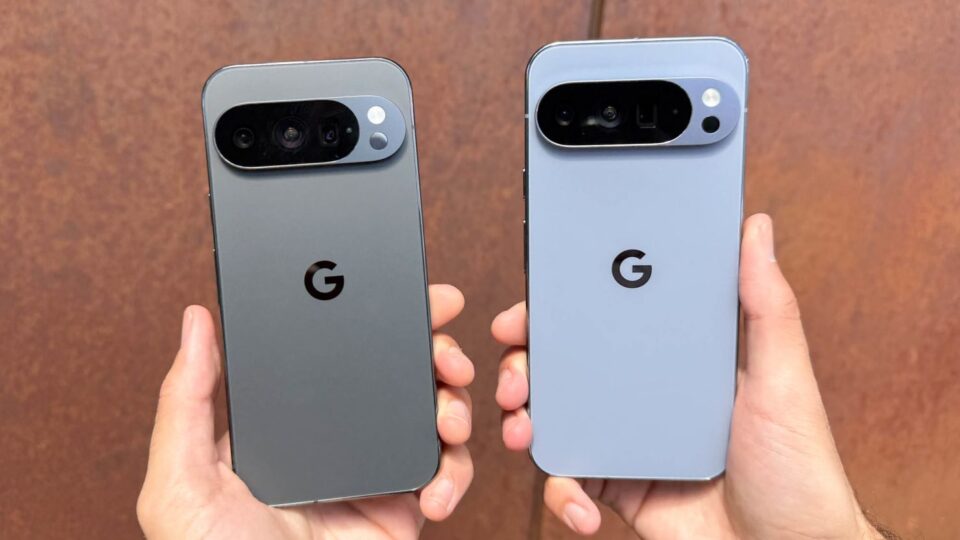
Google just launched the Pixel 10 series, and as always, there are two versions: the regular Pixel 10 and the more premium Pixel 10 Pro. At first glance, they may look similar, but once you dive deeper, the differences become clear. In this Google Pixel 10 comparison, we’ll explore design, display, performance, cameras, and more, so you can decide which one is the better fit for you.
Design
Both phones share the same design language, with Google’s signature camera bar stretching across the back. The Pixel 10 keeps things simple with a matte glass finish and soft edges, while the Pixel 10 Pro steps it up with a more premium look and extra polish.
When holding them, the regular model feels lighter and slightly smaller, which some people might prefer. The Pro, however, is built to stand out and gives off a more “flagship” vibe. This design contrast sets the stage for the rest of this Google Pixel 10 comparison.
Display
The Pixel 10 features a 6.3-inch OLED screen with 120Hz refresh rate, making everything smooth and vibrant. On the other hand, the Pixel 10 Pro goes bigger with a 6.7-inch LTPO OLED that not only supports 120Hz but also adjusts refresh rate automatically to save battery.
So, in this comparison, the regular model already offers a top-notch display, but the Pro version gives you more screen real estate and slightly better efficiency.
Performance
Both phones run on Google’s Tensor G4 chip, meaning you’ll get the same AI-powered tricks like Magic Editor, Call Assist, and Live Translate. However, the Pixel 10 Pro comes with 12GB of RAM compared to the 8GB on the standard model.
In daily use, this difference isn’t massive, but if you’re into multitasking or plan to keep the phone for many years, the extra memory in the Pro makes it a stronger choice.
Cameras
This is where things get interesting. The Pixel 10 carries a dual-camera system: a 50MP main shooter and a 12MP ultra-wide. The photos are sharp, vibrant, and benefit from Google’s powerful AI processing.
But the Pixel 10 Pro adds a 48MP telephoto lens with 5x optical zoom. This makes it far better for capturing far-away subjects without losing detail. So, if camera flexibility is important to you, the Pro clearly wins this round of the Google Pixel 10 comparison.
Battery Life
Both models come with solid batteries—4,700mAh on the Pixel 10 and a slightly larger 5,000mAh on the Pixel 10 Pro. Thanks to software optimizations, both last a full day, even with heavy use.
The Pro edges ahead slightly, especially when paired with its more efficient LTPO display. Still, for most people, the difference won’t be huge.
Software
No surprises here: both phones launch with Android 15 and promise 7 years of software updates. This makes them some of the longest-supported Android phones available.
What matters is that both deliver the same clever features—Circle to Search, on-device AI summarization, and more. So in terms of software, they are equals.
Full Specs and Features:
| Feature | Pixel 10 | Pixel 10 Pro |
|---|---|---|
| Display | 6.3″ OLED, 120Hz | 6.7″ LTPO OLED, 120Hz |
| Processor | Google Tensor G4 | Google Tensor G4 |
| RAM | 8GB | 12GB |
| Storage Options | 128GB / 256GB | 128GB / 256GB / 512GB |
| Rear Cameras | 50MP main + 12MP ultra-wide | 50MP main + 12MP ultra-wide + 48MP telephoto |
| Front Camera | 12MP | 12MP |
| Battery | 4,700mAh | 5,000mAh |
| Charging | 30W wired, 20W wireless, reverse | 30W wired, 20W wireless, reverse |
| OS | Android 15 | Android 15 |
| Updates | 7 years | 7 years |
Price
Here’s the real deal-breaker. The Pixel 10 starts at $899, while the Pixel 10 Pro starts at $1,099 in the US. That $200 gap is really about whether you want the telephoto lens, extra RAM, and slightly larger battery.
Check them both out here at the Google Store.